I have been waiting for a device like this for a long time.
This is not my idea, nor a concept I invented. Smart glasses already exist. What captures my attention is their potential — the possibility that this device could become the first technology capable of making computers, smartphones and countless screens gradually disappear.
Not by replacing them with yet another object, but by absorbing their functions and redistributing them into the world around us.
For the first time, it feels possible to imagine a future where technology does not require us to look down at a screen, hold a device, or interact with a physical interface. Smart glasses have the potential to become a universal layer — one that allows objects, environments and services to communicate with us directly, quietly and only when needed.
Used in this way, smart glasses are not just another device. They may be the device that allows many others to fade away.
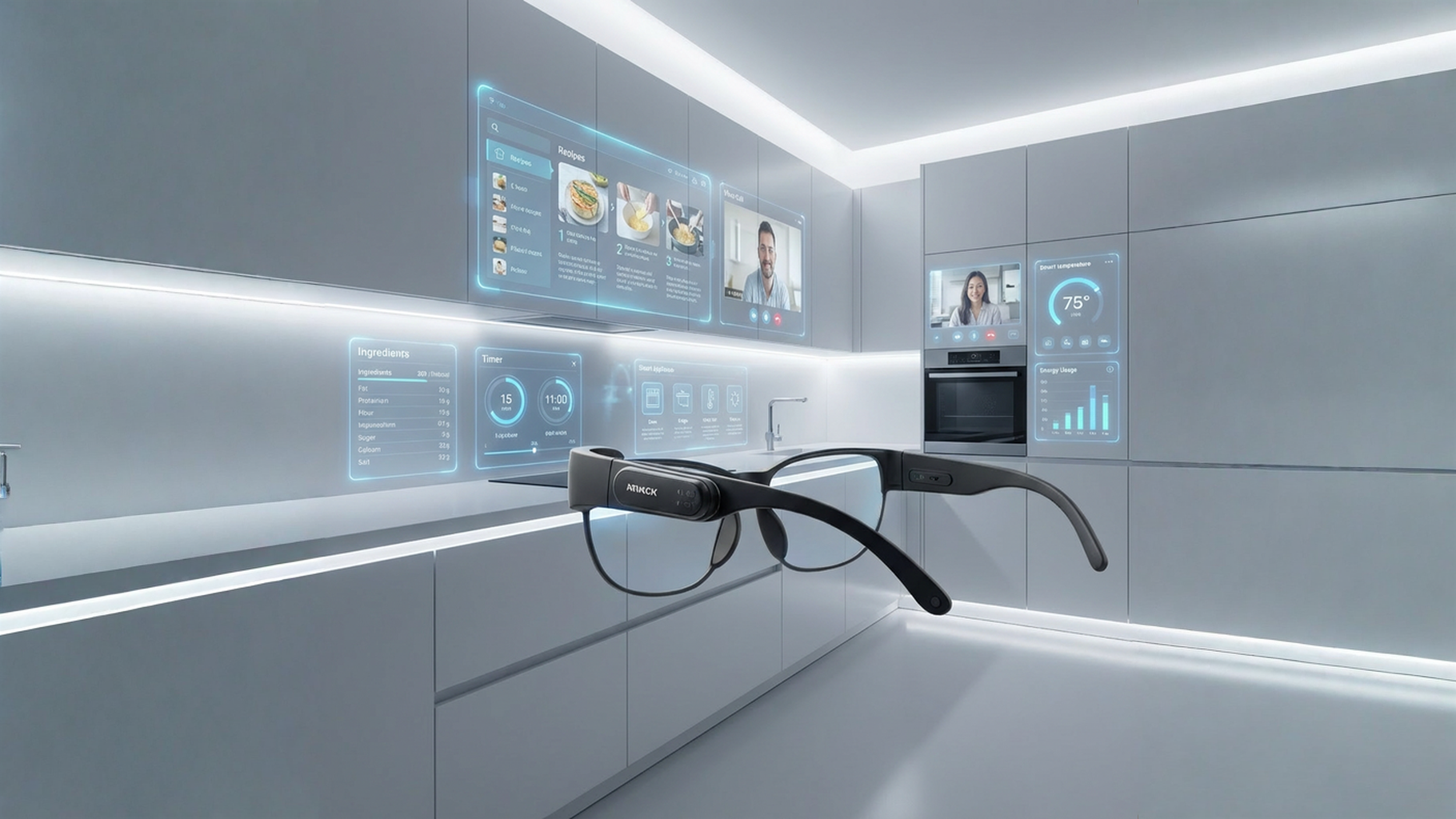
Smart glasses make it possible to remove displays, indicators, dashboards and control panels from objects, transforming physical devices into services. Complexity moves away from hardware and into software, where it can evolve without filling our environments with visual noise.
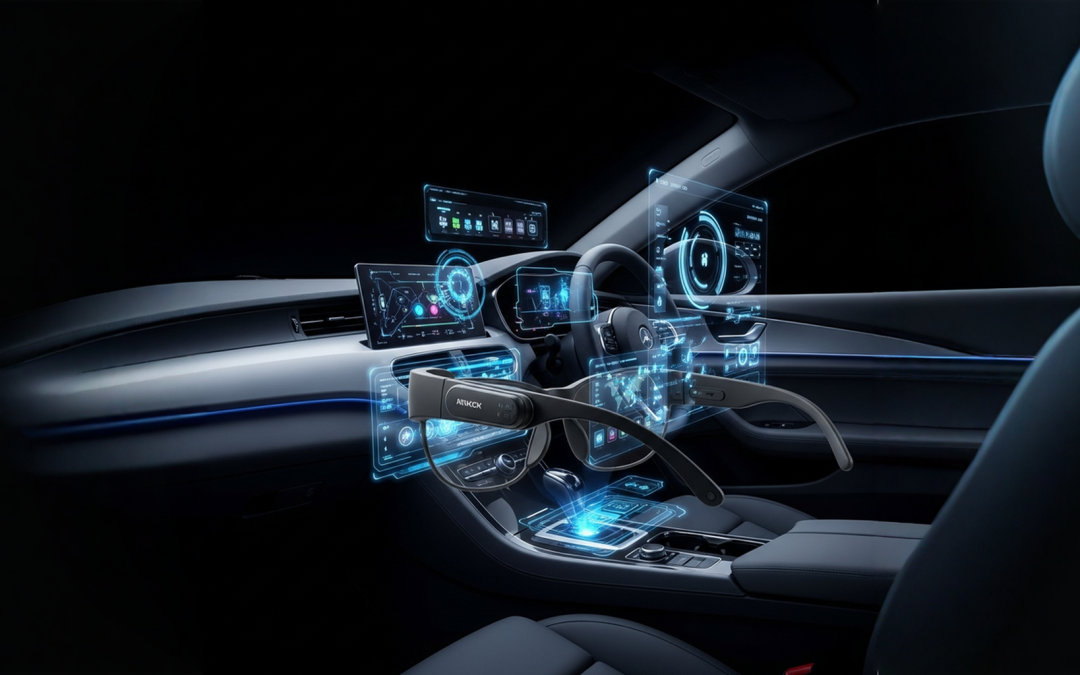
Imagine entering a car that looks almost empty. There is no dashboard, no central display, no instruments competing for attention. Only the steering wheel remains. You put on your smart glasses, and the car appears. Speed, navigation, alerts and rear visibility float naturally in your field of view, exactly when and where they are needed. The car itself stays calm, clean and timeless. Intelligence is no longer built into the object, but delivered as a service.
Now imagine the same principle applied to your home.
No television on the wall. No screens on appliances. No blinking lights demanding attention. The house is visually quiet. You are in your bedroom when a soft luminous signal appears in your view. Not an alarm, not a sound, just a gentle presence. From that signal, a thin luminous line extends through space, a visual thread to follow. You walk through the house, guided silently, until the line leads you to the washing machine. It needs your intervention. No screen. No beeping. No stress.
In this world, objects do not shout. Appliances do not constantly explain themselves. Technology stays invisible until it matters. Smart glasses become the translator between you and your environment. The washing machine does not need a display. The oven does not need buttons. The house does not need screens.
A natural question arises: what happens if the glasses break?
You are not your glasses. You are your identity. Smart glasses are only terminals, interchangeable and replaceable. Your experience lives in your login: preferences, permissions and services. Put on another pair, even a basic emergency one, log in, and everything comes back exactly as before.
Removing screens is not about hiding technology. It is about reducing noise. Fewer distractions, cleaner environments and longer-lasting objects. Technology stops shouting and starts waiting. It speaks only when it is truly needed.
Smart glasses are not the future because they show more information. They are the future because they allow us to simplify objects, calm environments and respect attention. Not a world full of screens, but a world where information appears only when it truly matters.