
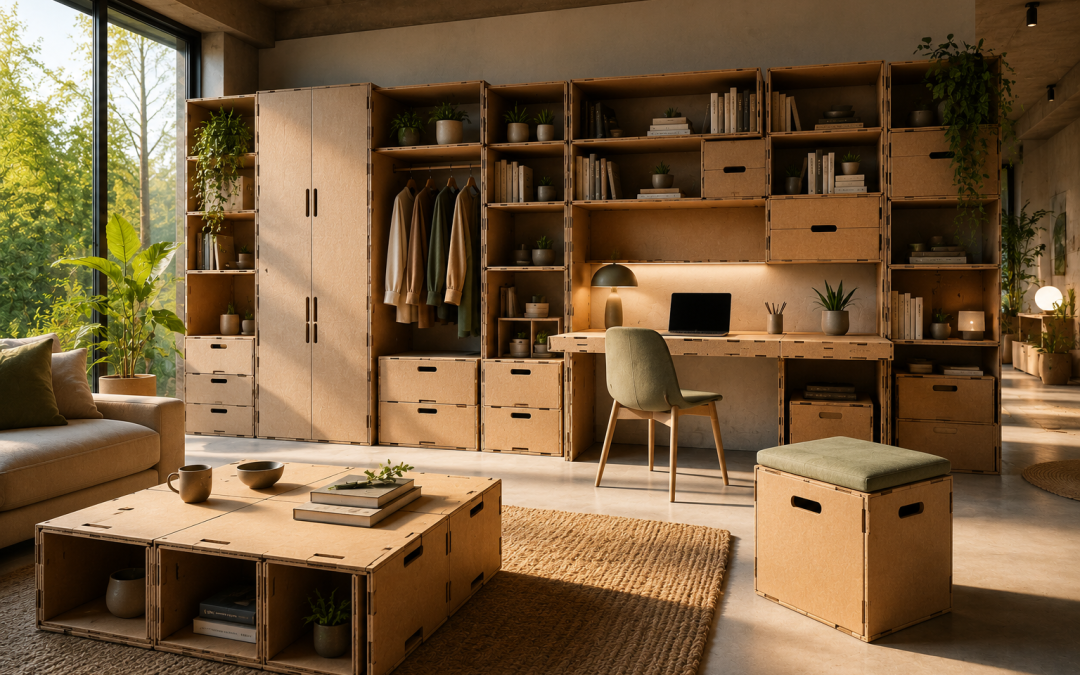
The Open Furniture Platform
A research project by Officina Lumen
Furniture does not have to be a fixed object.
It can become a temporary configuration of possibilities.
PulpCore is an open modular furniture platform developed as part of the research activity of Officina Lumen. It explores a different way of designing, building and living with furniture: not as a collection of closed objects, but as a system of components that can be assembled, repaired, replaced and reconfigured over time.
The starting point is simple.
If a piece of furniture becomes damaged, outdated or no longer suitable for a space, why should the entire object be discarded?
With PulpCore, furniture is not thrown away.
It is transformed, updated and regenerated.
The Idea
PulpCore was born from the desire to challenge the conventional logic of furniture.
Most furniture is designed as a finished object: a wardrobe, a desk, a shelf, a cabinet. Once produced, its function is largely fixed. If the room changes, if the user’s needs evolve, or if a single part becomes worn, the entire piece often loses value.
PulpCore reverses this logic.
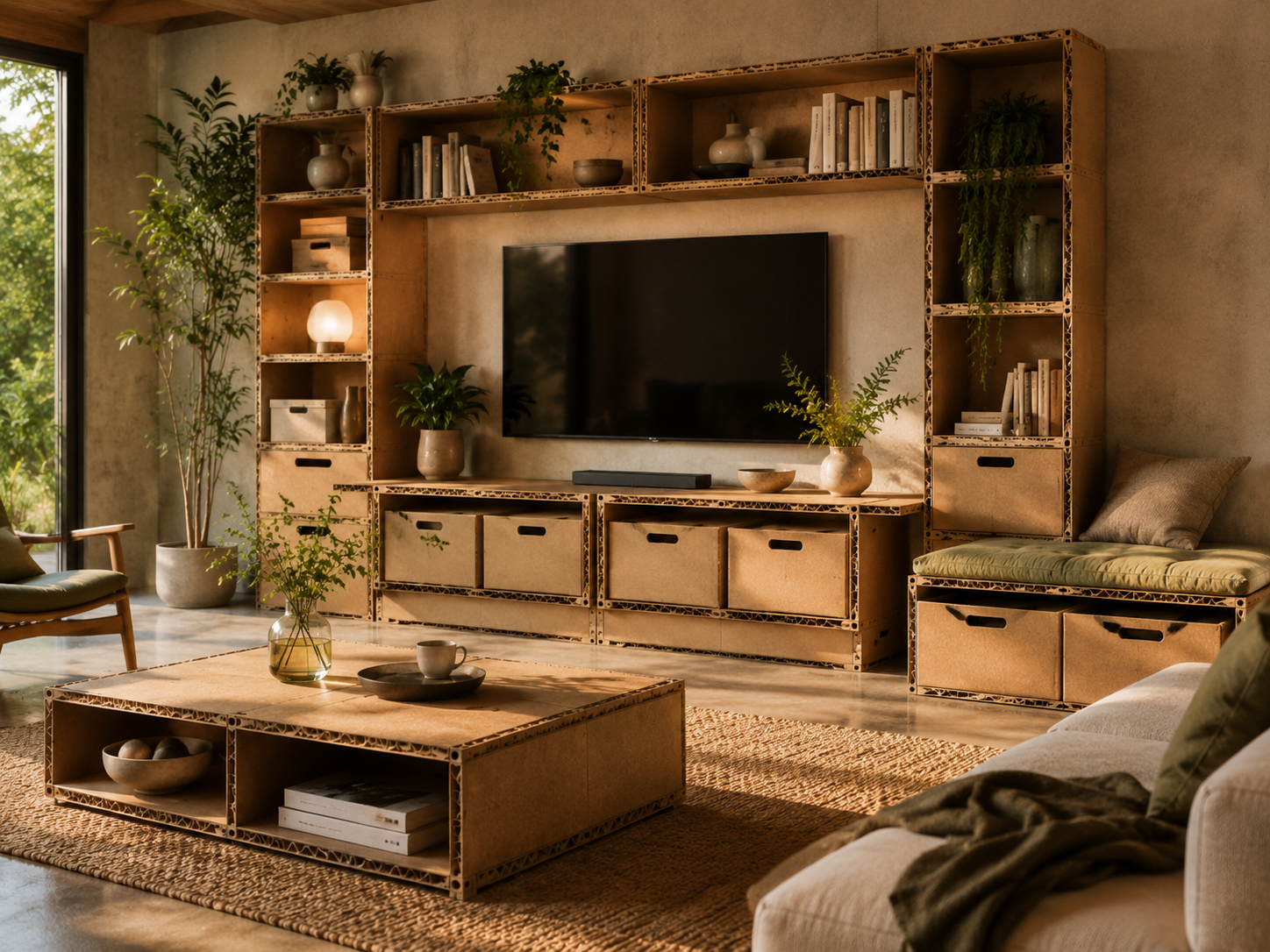
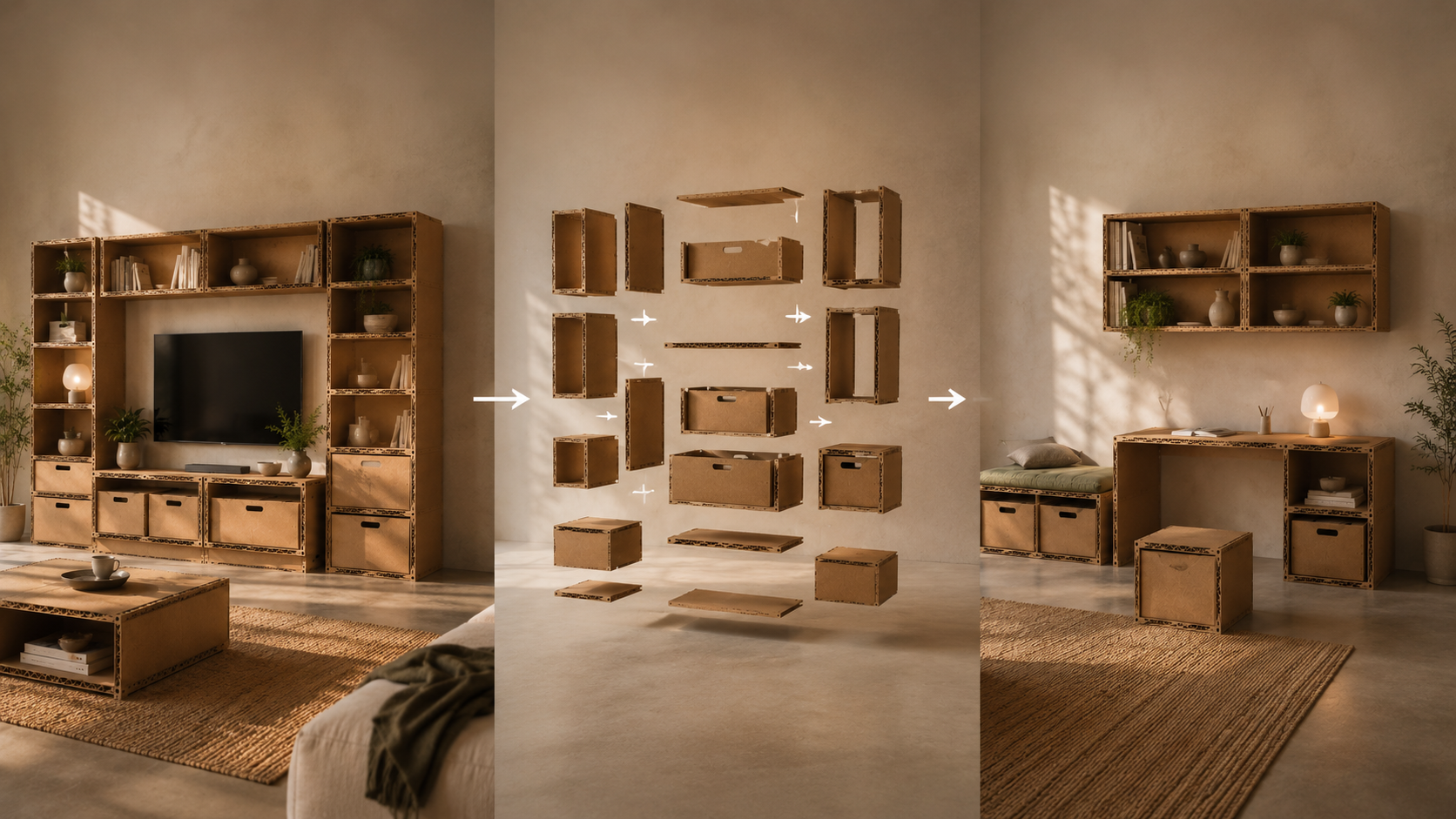
Instead of starting from the finished object, it starts from a construction language: blocks, panels, surfaces, joints and functional elements that can be combined in many different ways.
The same system can become a storage unit, a desk, a shelving wall, a wardrobe, a seating element, a temporary interior or a hybrid domestic structure.
The value is not only in what the furniture is today, but in what it can become tomorrow.
A Modular Living System
PulpCore is based on the idea of universal modularity.
A limited family of simple geometric elements can generate many possible configurations. Each component is designed to be part of a larger system, rather than a single isolated product.
This creates a new relationship between furniture and time.
A room can change without replacing everything.
A damaged surface can be replaced without discarding the entire structure.
A module can move from one function to another.
A domestic object can become a living system.
In this sense, PulpCore is not simply furniture made from alternative materials.
It is a proposal for a more flexible, repairable and circular way of inhabiting space.
Material Intelligence
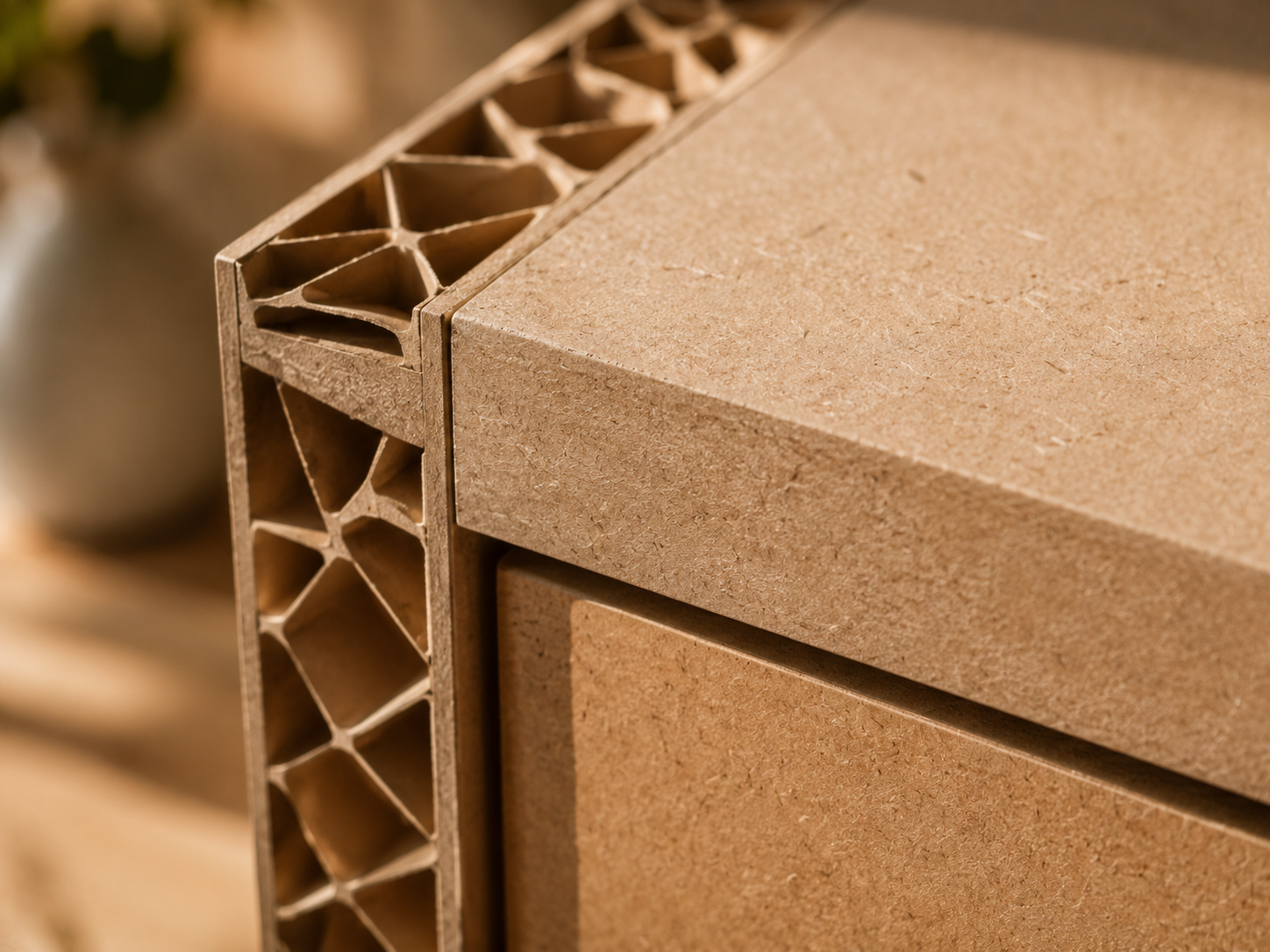
PulpCore explores the potential of paper-based materials as structural and expressive elements.
The project does not treat cardboard as a cheap substitute for wood. Instead, it investigates cardboard and pressed paper pulp as materials with their own identity, behavior and design language.
Different parts of the system respond to different physical needs.
Lightweight honeycomb cardboard can be used to create volume, vertical structures, open modules and storage bodies. Dense pressed paper pulp can be used for horizontal surfaces, worktops, shelves, bases and components exposed to greater wear.
The result is not a single material used everywhere, but a small architecture of materials: each layer, surface and structural element has a specific role.
This distinction is central to the project.
The volume can be light.
The surface can be strong.
The system can remain replaceable.
Repair, Replace, Reconfigure
One of the key principles of PulpCore is selective replacement.
A piece of furniture should not become waste because one part is damaged.
If a top surface is worn, only the top surface should be replaced.
If a module is no longer needed in one room, it should be reused in another.
If a home changes, the furniture should be able to change with it.
PulpCore does not aim to make every single component eternal.
It aims to make the system long-lasting.
The life of the furniture is extended not by freezing it in one perfect form, but by allowing it to evolve.
Reversible Assembly
PulpCore also explores a different approach to assembly.
Traditional furniture often depends on hidden hardware, complex joints, permanent glue or metal fittings that make repair and transformation difficult. PulpCore investigates cleaner mechanical connections, pass-through pins and integrated joining systems that allow components to be assembled and disassembled more easily.
The goal is not only to simplify construction.
The goal is to make change part of the design.
A reversible system allows furniture to be repaired, upgraded, transported, stored and reconfigured with less waste and greater freedom.
This is where sustainability becomes more than a material choice.
It becomes a design behavior.
Beyond the Single Product
PulpCore is not conceived as a single item.
It is a platform.
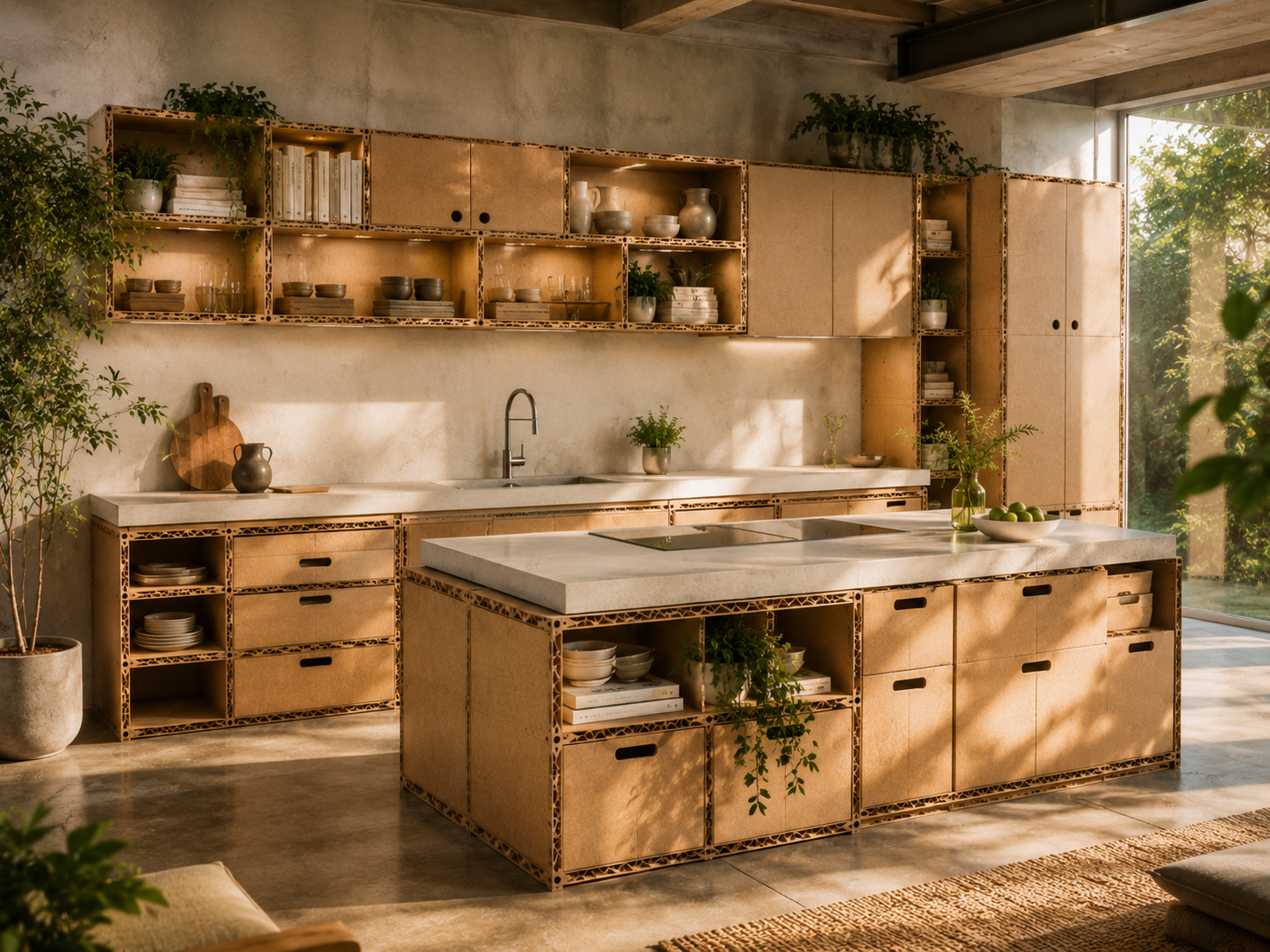
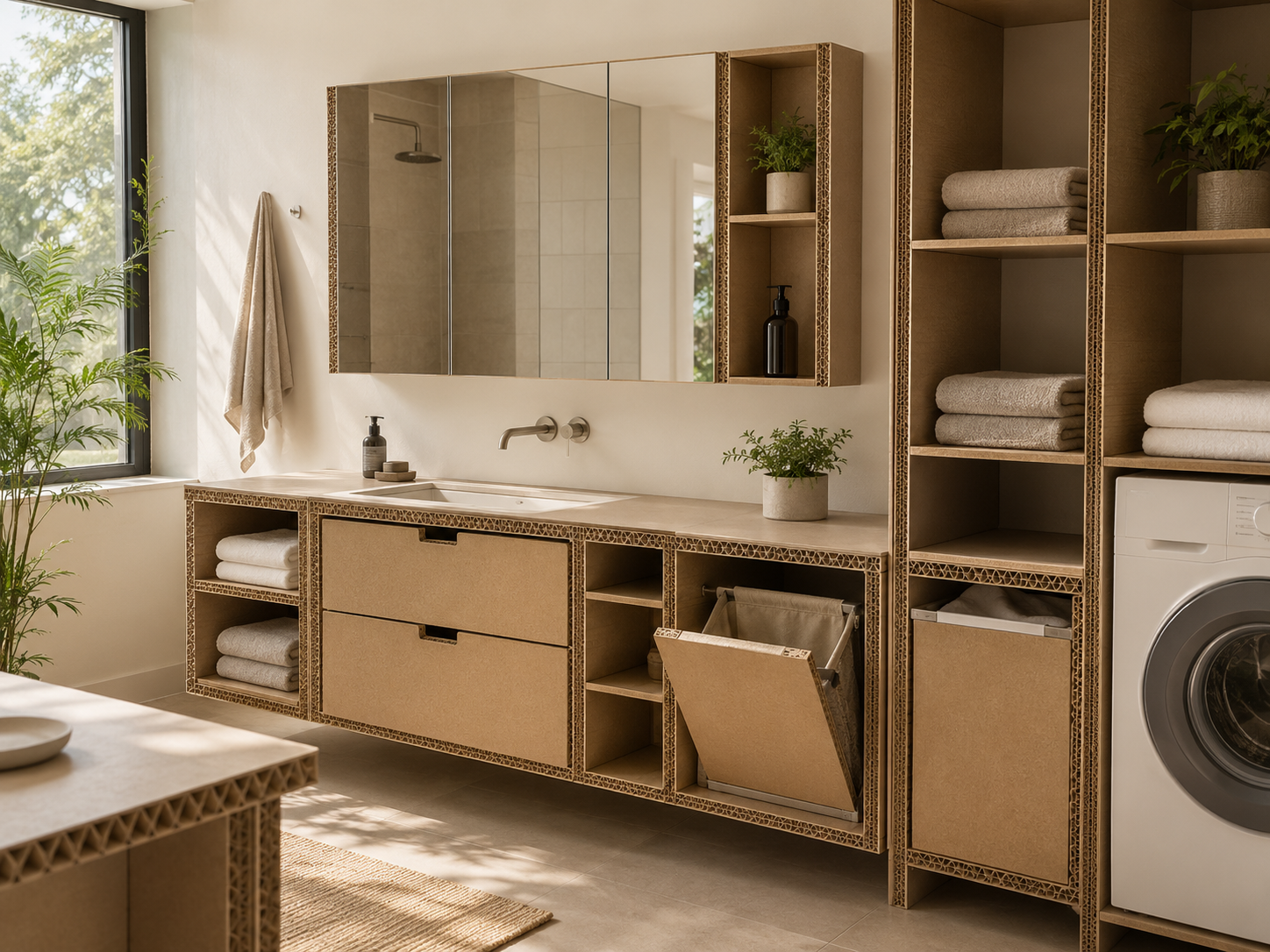
It can potentially generate storage systems, workstations, wardrobes, shelving units, room dividers, seating structures, kitchen modules, bathroom furniture and temporary installations.
This does not mean that every application is technically solved from the beginning. Wet areas, heavy loads, heat, humidity and long-term wear require specific research, testing and protective solutions.
But the direction is clear.
PulpCore asks whether the domestic environment can be built from a shared modular language: lighter, more adaptable, more repairable and more conscious of material use.
A Research in Progress
PulpCore is a research project, not a finished answer.
It investigates material behavior, structural resistance, surface protection, assembly systems, production methods, transportation, replacement logic, visual identity and user experience.
Its purpose is to open a path.
A path toward furniture that is less rigid, less disposable and more capable of following the real transformations of everyday life.
Not furniture that remains forever the same.
A system that keeps changing because life keeps changing.
Short Summary
PulpCore is an Officina Lumen research project exploring an open modular furniture platform made from engineered paper-based materials. It proposes a repairable, replaceable and reconfigurable approach to furniture, transforming domestic objects into adaptive systems that can evolve over time.